
PLA is generally the stiffer, easier-to-print option; PETG is generally tougher, less brittle and more heat tolerant. For a printed organiser, the right choice depends on where it will be used, what it holds and how the whole product is designed. Neither material name gives you a safe working load or a guaranteed service temperature.
A small bit organiser in a cool indoor drawer has different requirements from a wall shelf near a sunny window or a part that flexes every time it is used. Start with those conditions before choosing PLA or PETG.
At Layered Works, materials vary by product and intended use. Our About page lists PLA, PLA Plus, PETG and TPU. Check the individual listing, or ask us about your requirements; every item is not automatically available in every material.
| What matters | PLA | PETG |
|---|---|---|
| Stiffness | Usually more rigid: resists bending. | Usually has more give. |
| Impact and flexing | Comparatively brittle; unsuitable flexing can cause cracking. | Generally tougher and less brittle, subject to design and grade. |
| Heat | Limited heat tolerance; avoid hot storage conditions. | Generally handles more heat than standard PLA, but is not heatproof. |
| Printing | Generally easier to achieve fine detail and a tidy finish. | Can need more care with stringing, supports and print-surface adhesion. |
| Choosing an organiser | Consider a correctly designed item for its stated indoor storage use. | Consider a correctly designed item where its stated use benefits from the material. |
These are general tendencies for standard materials. FormFutura’s PLA and PETG comparison explains the trade-off between rigidity and toughness. Modified, filled or specialist formulations can behave differently, so use the exact filament specification when performance matters.
PLA stands for polylactic acid. It is a common filament for FDM printing, where a printer builds a part in layers. Prusa’s PLA guide describes its ease of printing, good detail and low tendency to warp, alongside its limitations with heat, UV exposure and impact.
PETG is glycol-modified polyethylene terephthalate. It is widely used for functional printed parts because it combines toughness with useful printability. Prusa’s PETG guide covers its good layer adhesion and resistance to water and humidity, as well as challenges such as stringing and strong adhesion to the build surface.
For someone buying a finished organiser, those printing differences are background information. The important questions are whether the listed item fits your equipment and whether its intended use matches your environment.
“Stronger” can mean several things. A rigid part that barely bends, a part that survives a knock and a part that resists a pulling force are being judged in different ways.
UltiMaker’s guide to printed-part strength distinguishes tensile strength, impact resistance and layer adhesion, and explains why print orientation and settings affect results. A filament test specimen and a finished holder with holes, corners and fixings are different shapes under different loads.
For example, a bit tray supported by a drawer base and a shelf projecting from a wall have different load paths. The shelf’s projection, fixing positions and wall construction matter alongside the plastic. You cannot give both the same capacity because they share a material.
Standard PETG generally has better heat resistance than standard PLA. That does not establish a safe temperature for a particular printed organiser. The filament grade, shape, load and length of exposure all matter.
Printing temperature is also different from service temperature. A nozzle setting describes the conditions used to produce a part; it does not tell you how hot the finished part can become while supporting equipment. Likewise, a material data-sheet test value is not automatically a product rating.
Avoid assuming either material is suitable for a hot vehicle, direct sun or a position near a heater. Our 3D printed product finish and care guide sets out the site’s guidance on heat and storage. If warm conditions are unavoidable, explain the location and expected exposure before ordering.
For a garage, be specific about the position: a shaded indoor drawer, a shelf under a roof and a windowsill are different situations. If the operating temperature or load is important but unknown, get that information before selecting the product.
Resistance to water does not establish resistance to every cleaning product. A PETG shelf that stores closed detailing bottles is not automatically suitable for soaking in the contents. Check the intended use and avoid treating general material comparisons as chemical-compatibility approvals.
There is also a difference between a finished part’s exposure to moisture and a spool absorbing moisture before printing. Moist filament can affect print quality. It does not follow that every finished PETG organiser is waterproof or suitable for permanent outdoor use.
For everyday care, follow the product guidance. Layered Works recommends wiping most items with a dry or lightly damp cloth and avoiding harsh solvents, abrasives and excessive heat. Mention outdoor exposure or contact with a specific chemical as part of a custom enquiry.
Changing material is only one possible design decision. Wall thickness, ribs, corners, clearances, print orientation and the way a part is supported can all affect how it behaves. Increasing infill alone does not resolve every weak feature or unsuitable mounting arrangement.
Ask what the part needs to do. Does it simply separate small items? Must it resist movement while a tool is removed? Will a clip flex repeatedly? Is a wall-mounted item supporting a load away from its fixings? Those details help establish whether the design and material are suitable together.
A visible layer line does not measure strength, and a smooth surface does not prove a part is suitable for a heavy load. Use the listed purpose, fit information and care instructions rather than judging suitability from appearance alone.
These examples show how the material specification sits alongside capacity, dimensions and mounting requirements. Check the current listing and selected option before ordering.
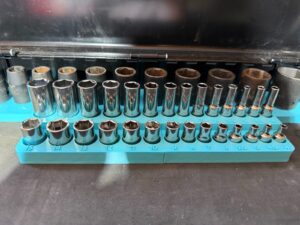
The 1/4″ Hex Tool Bit Organiser — Holds 24 lists PLA in its additional information. It holds up to 24 suitable 1/4-inch hex bits and measures 83.5 × 41 × 25mm. Its base includes two glued-in neodymium magnets, each 12 × 3mm. Bits and other photographed equipment are not included.

This is a useful example of checking the complete arrangement: the holder footprint, the bit fit and the height with bits fitted. Use magnetic organisers on suitable clean, flat steel as described. Magnets are not load-rated fixings or transport restraints; do not assume upright mounting or retention in a moving van.
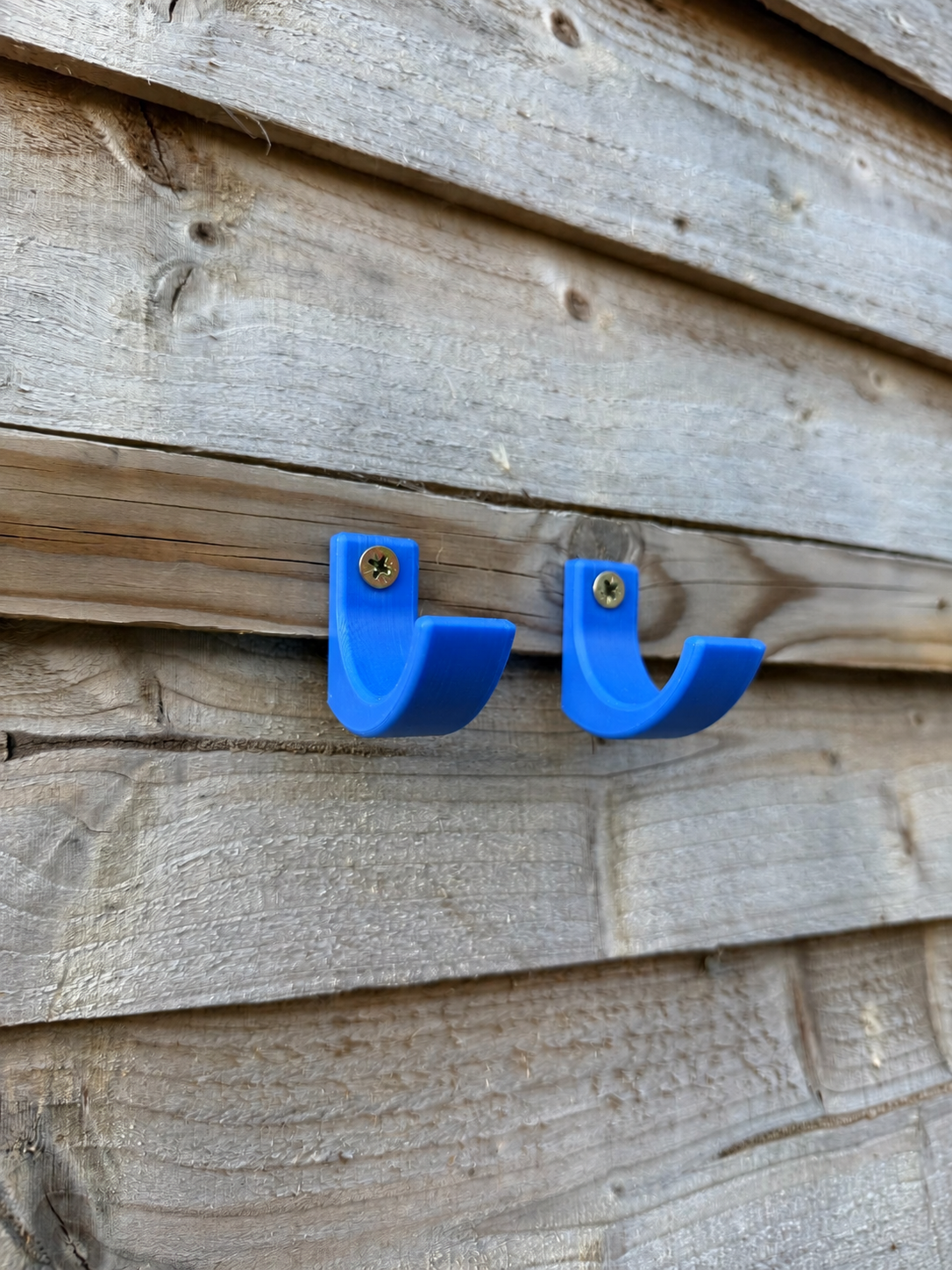
The 4-Bottle Ceramic Coating Shelf is explicitly listed as printed to order in PETG. Choose the version for bottles up to 38mm or 46mm in diameter. The approximate outer dimensions are 179 × 43 × 48mm and 209 × 52 × 48mm respectively.
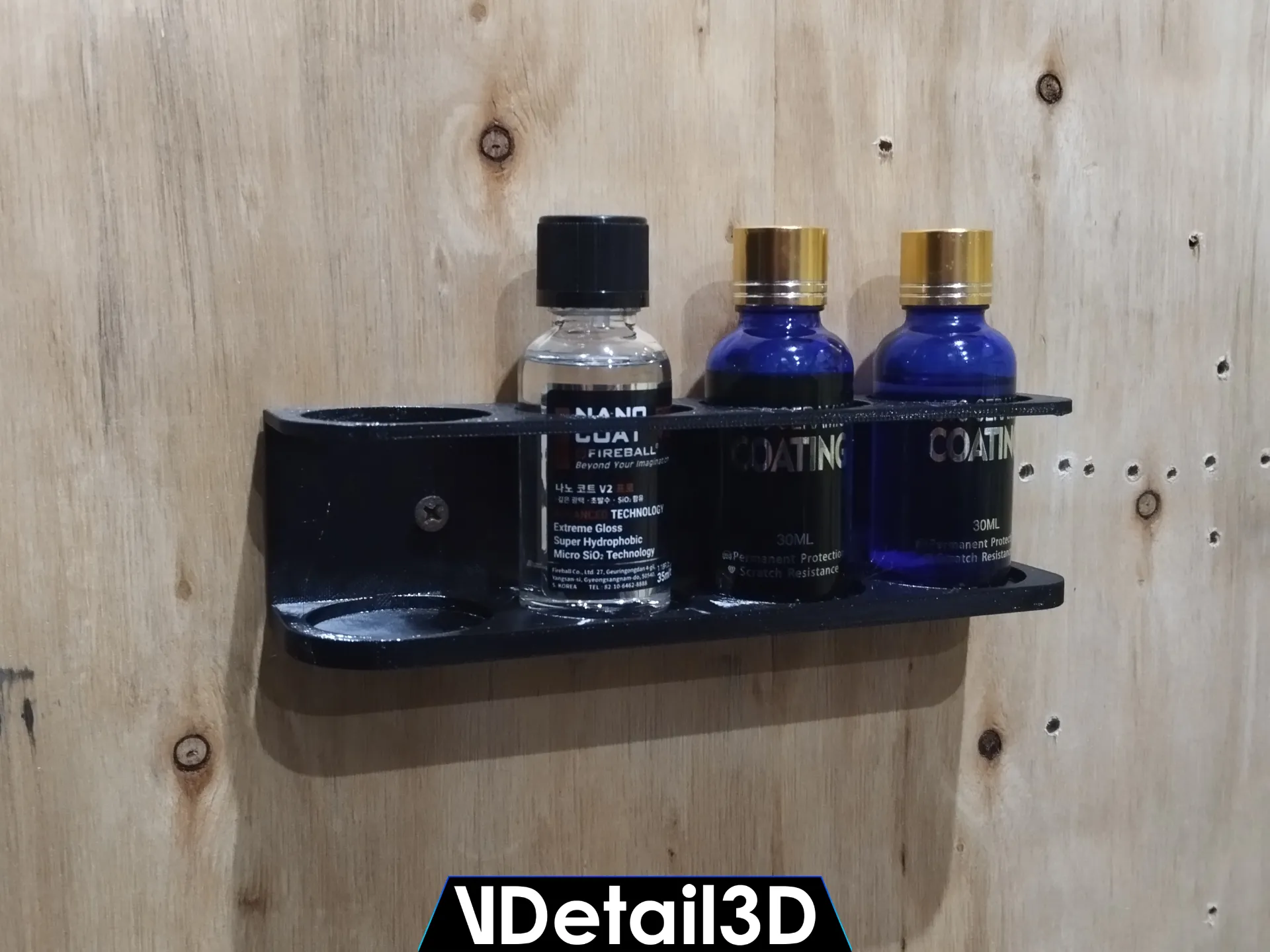
The shelf listing includes the selected printed item only. Bottles, chemicals, tools and wall fixings are excluded. Measure bottle diameter rather than relying on the volume printed on its label, allow room to lift bottles out and choose fixings appropriate to the mounting surface.
The design is credited to vlodek2532 on MakerWorld, commercially licensed for production by Layered Works. Its PETG specification does not imply a published load rating or compatibility with spilled coating chemicals.
Our custom printed orders service starts with a review of the request. Material and colour options depend on the job and availability; a custom request is subject to feasibility review. Include the practical requirement even if you already have a preferred material.
Either may suit a correctly designed item for its stated purpose. For a cool indoor drawer, fit, layout and clearance may be more useful selection criteria than choosing one material universally. Check the actual product specification.
No. PLA is generally stiffer, while PETG is generally tougher and less brittle. “Stronger” needs a defined load and test. The finished design, print orientation and conditions of use affect the result.
Do not assume either is suitable. PETG’s relative heat advantage is not a guarantee for a hot vehicle or a loaded part. Follow the listing and discuss unavoidable heat exposure before ordering.
No. Water resistance of the material does not prove that a printed assembly is watertight, and it does not establish compatibility with a particular solvent or detailing chemical. Check the specific application.
Do not assume identical properties. PLA Plus is used for modified formulations, so check the actual supplier’s specification. The name alone does not establish a heat rating or a consistent advantage over PETG.
No universal material option is promised. Order the material and variation stated in the listing. For a different material, colour or environment, send the product details and intended use so we can review what may be possible.
Start with the listed 24-bit organiser or PETG coating shelf if either matches your needs. For a different layout or a material question, send a custom enquiry with your dimensions, photos and intended use. We will review the requirements before confirming what is feasible.