
For a standard standing steel-tip dartboard setup, place the centre of the bull at 1.73 m above the playing floor and the throw line 2.37 m horizontally from the board’s face. Mount the board securely, keep the throwing lane clear and give spare darts a separate storage position. The distance starts at the playing face, not the wall behind it.
A useful home setup also needs room for your stance, a clear route to collect darts and somewhere to keep spare sets without putting them in the firing line. This guide covers the measurements first, then the practical decisions for a games room, garage or shared space.
These are the standard standing steel-tip measurements given in Winmau’s setup guidance. Keep metric and imperial values consistent when measuring; the familiar imperial figures below are approximate equivalents.
| Measurement | Standard steel-tip setup | Measure between |
|---|---|---|
| Bull height | 1.73 m / 173 cm (about 5 ft 8 in) | Playing-floor level and centre of bull |
| Throwing distance | 2.37 m / 237 cm (about 7 ft 9¼ in) | Board face and standing-side edge of the oche |
| Diagonal check | About 2.93 m | Centre of bull and the same oche reference point |
The oche is the line or raised bar you throw from behind. For a raised oche, the standing-side edge is the edge your toes stop behind. With a flat floor marker, use a clearly defined standing-side edge so everyone measures and plays from the same point. The diagonal is a cross-check for the standard height on a level playing floor; it does not replace checking the height and horizontal distance separately.
Soft-tip and electronic systems can use a different throwing distance. Shot Darts’ hanging guide distinguishes 2.37 m for steel tip from 2.44 m for soft tip. Follow the manual and rules for your actual board rather than assuming one layout covers every game.
Before drilling, stand where you expect the oche to be and walk through a full turn: approach the line, throw, step away and collect the darts. You need usable space behind the line as well as the measured distance in front of it. A room that is only 2.37 m deep is not enough for that complete sequence.
If a garage shares space with a car or workshop, plan when it can be used for darts without blocking access. Do not treat a dart surround as permission to throw towards stored equipment. For the wider room layout, our garage storage guide covers keeping working and access areas usable.
The hardware varies between boards, cabinets and stands. Use the installation instructions supplied with your exact model, and choose fixings suitable for both the wall and the complete mounted load. Check for hidden services before drilling. A cupboard back, plasterboard partition and masonry wall should not automatically receive the same fixings.
Mark the intended bull position, then work out where that model’s bracket must sit. The bracket’s fixing holes are not necessarily at bull height. Once hung, check that the board is vertical, secure and correctly orientated with 20 at the top. Recheck the bull height on the installed board rather than relying only on the original pencil mark.
For a cabinet, measure with both doors fully open. For a freestanding dartboard stand, allow for the legs and use its locking or stabilising arrangements as instructed. A portable stand avoids a wall fixing but still needs a stable position and a fresh distance check whenever it moves.
A cabinet, backing board or bracket moves the playing face forward from the wall. Measuring 2.37 m from the wall would therefore leave the player too close to the board. Finish mounting the board before marking the final throw line.
For example, if the mounted board’s face is 40 mm forward of the wall, the same standing-side oche reference will be 2.41 m from that wall: 2.37 m + 0.04 m. This is an example calculation, not an assumed thickness for your board. Measure the actual projection of your installation.
A sloping floor or different floor levels can make a simple tape measurement misleading. Establish the floor level at the throwing position before setting the bull height, and seek suitable setup guidance if the playing area is uneven. Do not use the diagonal alone to disguise an incorrect height or distance.
A surround or backboard can protect part of the wall, and suitable floor protection can help where darts may land. Neither makes the entire room protected. Check the coverage of the actual products, their mounting instructions and how they fit with your board or cabinet.
Choose lighting that lets you see the scoring segments clearly without shining into the player’s eyes. Check for shadows with darts in the board, route power cables away from feet and leave access for switching the light off. Put a manual scoreboard or device where it can be read and reached between turns without obstructing play.
Do not hang extra equipment from a dartboard’s central fixing unless the relevant manufacturers permit it. Winmau’s installation and care notes warn that heavier accessories can place excessive weight on the board fixing. A lighting system, surround and cabinet need to be considered as a complete installation.
Once the playing area works, choose storage by the number of complete sets you use and where they can sit outside the lane. A holder makes darts easier to organise; it is not an enclosed safety case. Keep sharp points and stored equipment away from children and pets, and use suitable enclosed storage when needed.
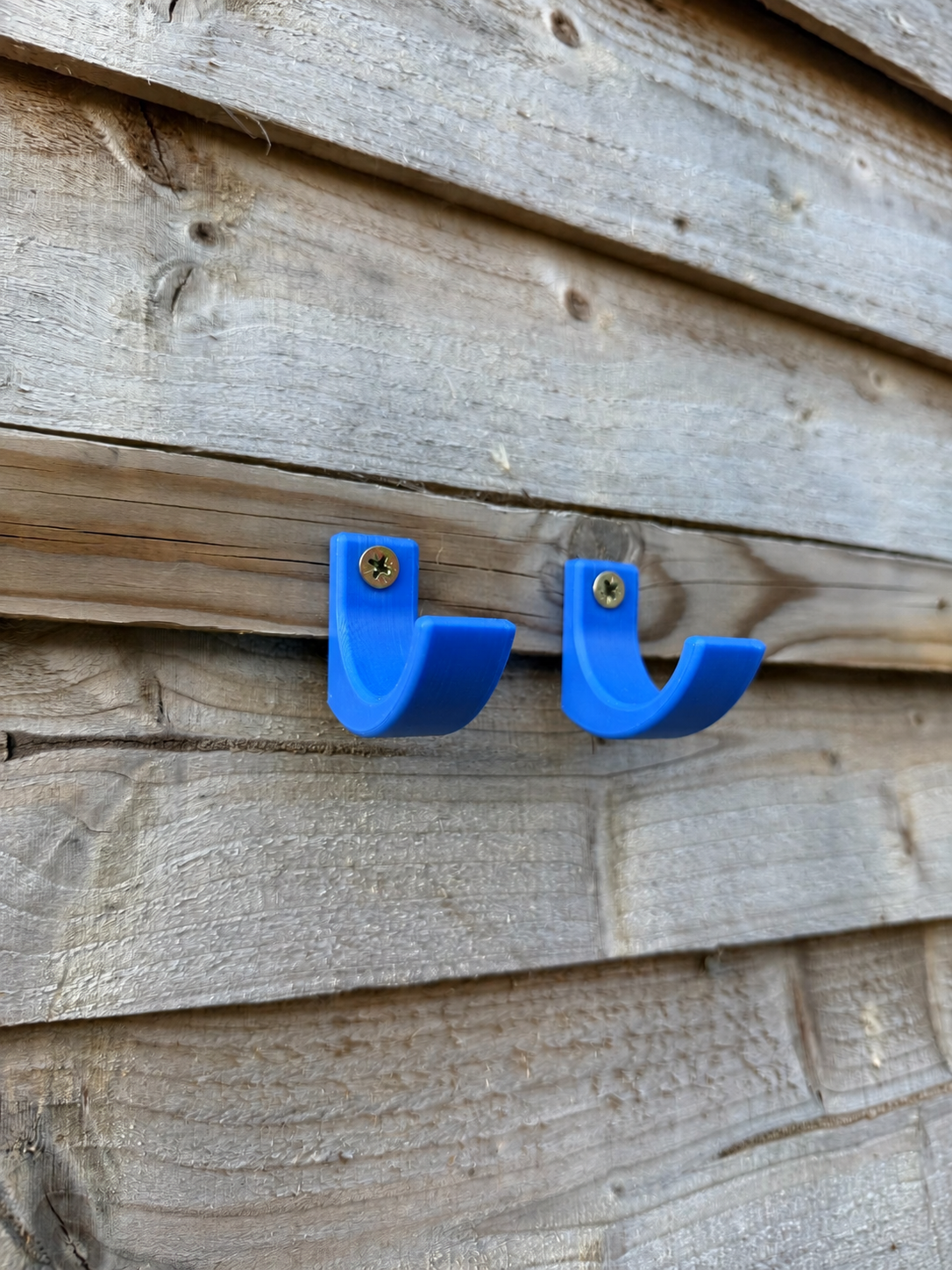
The Layered Works Wall Mounted 3-Dart Holder holds one set of three darts and measures approximately 80 × 30 × 15 mm. The listing states suitability for steel-tip and soft-tip darts and includes one holder, two screws and two wall plugs. Darts are not included. Supplied plugs may not suit every mounting surface.
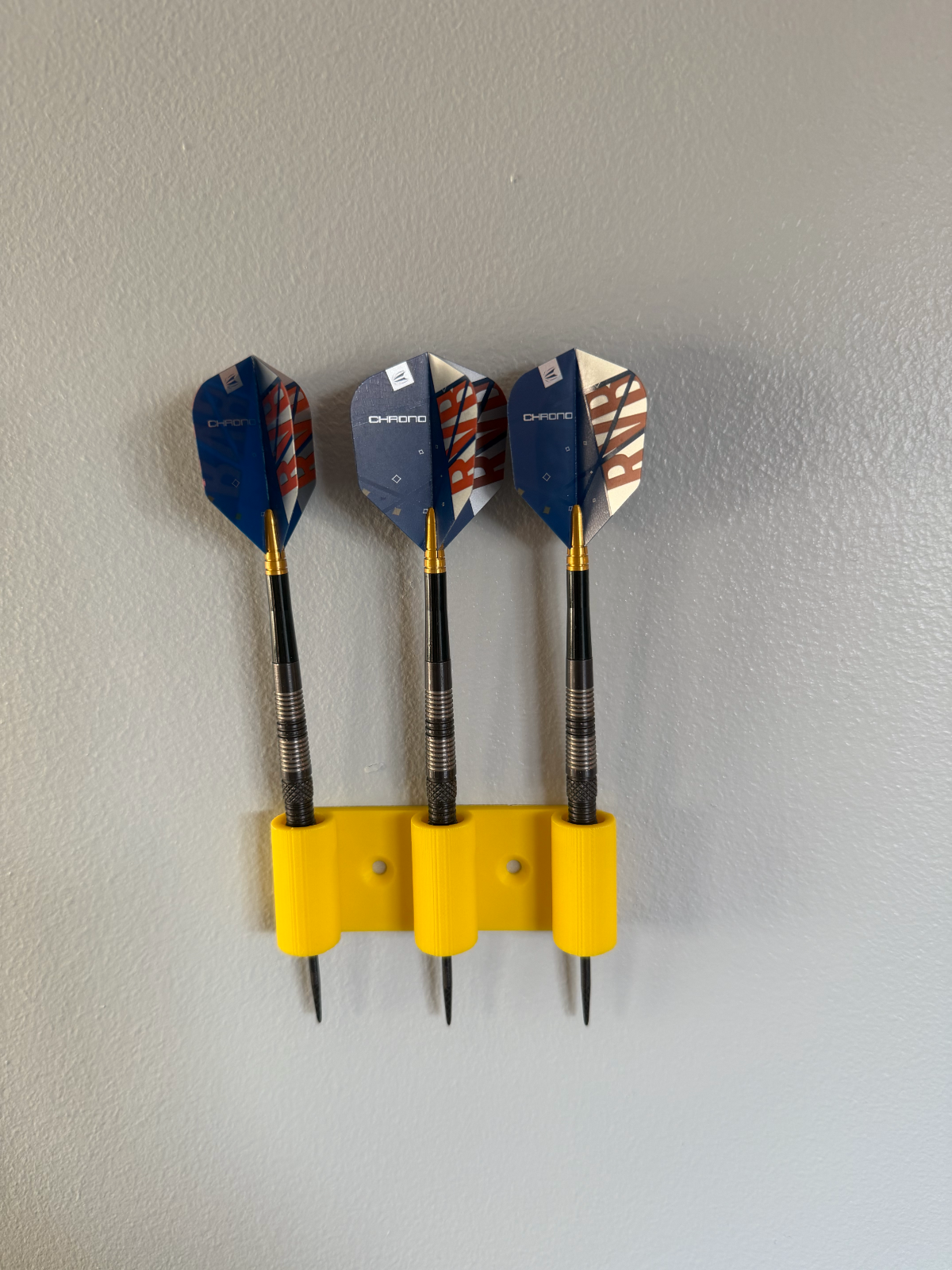
Position it to the side of the playing area, with enough clearance above it to lift darts out without catching the flights. The holder’s dimensions describe the printed part, not the full space needed by assembled darts. Check your own dart shape and the wall surface before ordering or fitting.
The Layered Works Curved Stand for 12 Darts holds up to 12 assembled darts: four sets of three. Its two interlocking curved sections form an approximate 130 × 130 mm footprint, with a stand height of 104.8 mm. It is freestanding and needs no wall mounting. The stand sections are supplied; photographed darts are not included.
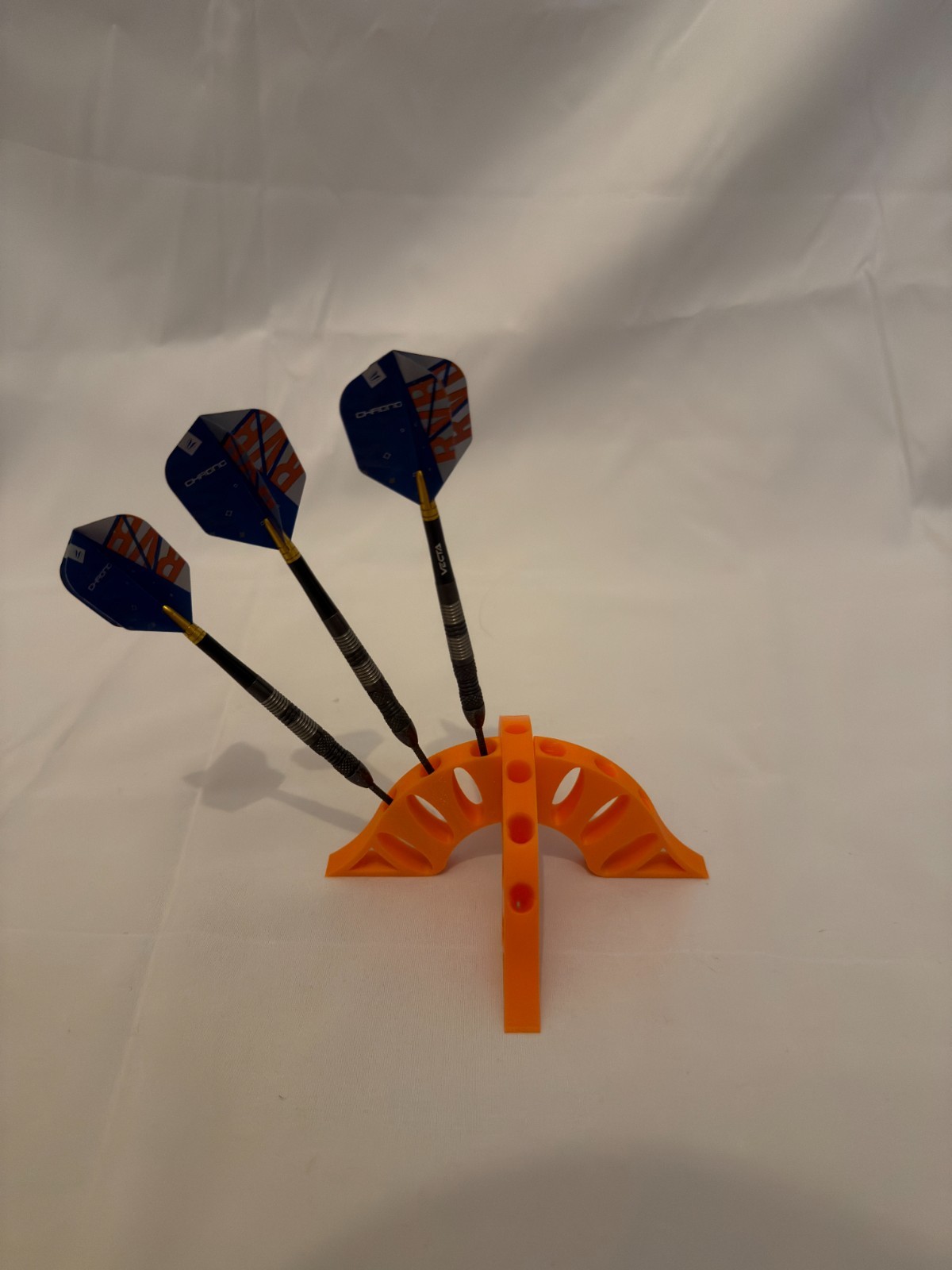
Use a suitable flat shelf or table outside the playing lane and allow extra height for the assembled darts. The listing covers steel-tip and most standard assembled darts, with fit checks advised for unusually wide barrels, specialist designs or oversized accessories. Do not assume that every dart fits solely because the stand has spare positions.
Compare other capacities in the Layered Works dart holder range. These are storage accessories; a holder does not include a dartboard, lighting system or darts unless its listing explicitly says so.
Recheck the measurements after moving a stand, changing a cabinet or adding a backing layer. Follow your board’s care instructions too: for example, Winmau advises keeping bristle boards cool and dry and not soaking or spraying the playing surface. A damp garage needs attention before it becomes a permanent darts space.
For the standard standing steel-tip setup, measure 1.73 m from playing-floor level to the centre of the bull. The top of the board, the top of the surround and the bracket holes are different reference points.
No. Measure horizontally from the board’s playing face. Transfer that position to the floor before measuring to the oche. Cabinets and backing boards can increase the difference between the wall and the face.
Only if the full layout works: the measured throw, space behind the oche for your stance, safe access to retrieve darts and no through traffic across the lane. Do not shorten the regulation distance just to fit the room if you want standard practice conditions.
Yes, a purpose-made dartboard stand can be an option where wall mounting is unsuitable. Check its board compatibility, footprint and stabilising instructions. Measure from the mounted board face and recheck the setup whenever the stand moves.
Do not assume the standing height applies. Winmau’s WDDA information describes the 1.37 m board height used with the approved Wildfire 137 arrangement. Check the relevant competition or accessibility guidance for the player and equipment being used.
Send a custom print enquiry with photographs, measurements, the number of darts and details of any unusual barrels or flights. Custom printed requests are subject to feasibility review; do not assume an existing holder can simply be resized.
Browse dart holders and display stands to find a capacity and mounting style that suits your space. Check the exact dimensions and included items on each listing, or send the details of your setup before ordering if the fit is uncertain.